
*Your well has been disinfected with a chlorinated solution. We recommend not using your water for a period of 12 hours* to allow the disinfectant added to the well to complete its reaction.
*Your well has been disinfected with a chlorinated solution. We recommend not using your water for a period of 12 hours* to allow the disinfectant added to the well to complete its reaction.
During this period, it is therefore important NOT TO CONSUME THE WATER or use it for construction work (e.g., mixing concrete or other work), until you have completed the well purging process and carried out a bacteriological analysis of your water confirming that it is safe to drink. This analysis must be performed at least 2 weeks after the well has been purged and with normal water use. If the analysis is carried out too soon after the well has been disinfected, the results will be distorted and inaccurate.
During this period, it is therefore important NOT TO CONSUME THE WATER or use it for construction work (e.g., mixing concrete or other work), until you have completed the well purging process and carried out a bacteriological analysis of your water confirming that it is safe to drink. This analysis must be performed at least 2 weeks after the well has been purged and with normal water use. If the analysis is carried out too soon after the well has been disinfected, the results will be distorted and inaccurate.
Here’s what you need to know after the installation of your well and pumping system.
How to purge your recently drilled well
You will need to purge your well by following the procedure below.
The well purging must be done using a garden hose connected to an outdoor outlet of the house or directly to the hydropneumatic tank. Also, the water must not pass through any water treatment device, such as a water softener, filter, or other equipment, as this could damage them.
Once the 12-hour reaction period is complete, you must purge the well to remove any residual chlorine. If your water is coloured at the beginning of the purging process, this is a normal reaction between the chlorine and the minerals in the water. You must purge your well until the water is clear and free of residue, discolouration, and any smell of chlorine or bleach.
The purging procedure differs depending on the well’s water flow rate (this information was provided to you by a member of the Experteau team in the drilling report):
i. If your well has a flow rate greater than 300 gallons per hour (19 litres/minute), theoretically, you may let the water run continuously with a garden hose until the purging process is complete.
ii. If your well has a flow rate of 100 to 300 gallons per hour (6.3 to 19 litres/minute), it would be safer to let the water run for a period of 30 minutes, followed by a 4-hour shut-off period, and then repeat the cycle afterward.
iii. If your well has a flow rate below 100 gallons per hour (6.3 litres/minute), we recommend letting the water run for a period of 30 minutes, followed by a 12-hour shut-off period.
Once the purging process is complete, put your water treatment system (filter and/or softener) back into operation and use the water normally. However, we recommend not consuming it until it has been tested to confirm that it is safe to drink.
Microbiological / Bacteriological Analysis
The bacteriological analysis is used to determine the level of bacteria in the water and confirm that it is safe to drink. For full details, visit our complete page on bacteriological analysis.
Wash your hands or wear new, clean disposable gloves.
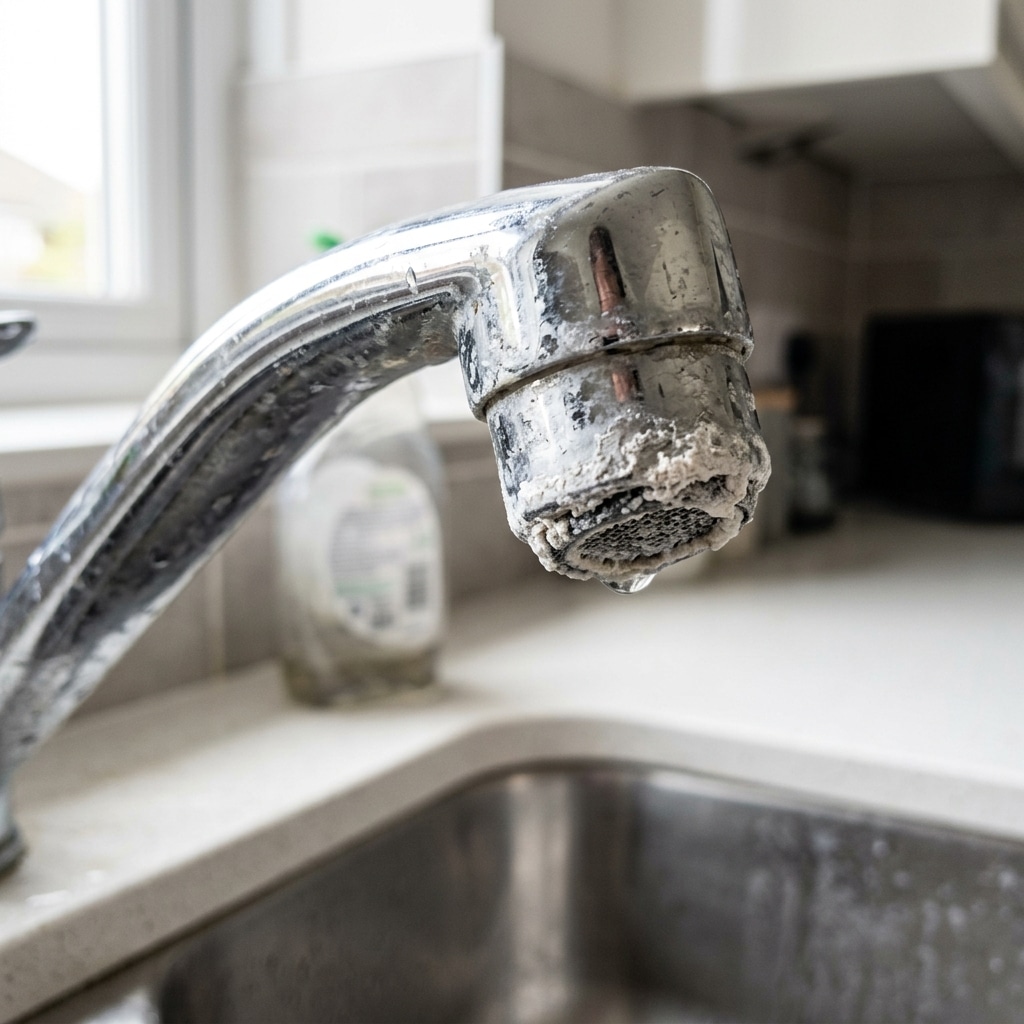
Choose a cold-water tap that is not connected to an individual treatment system. Remove any device located under the faucet spout, such as an aerator, screen, spray head, etc. If they cannot be removed, choose another tap. Do not take the sample from an outdoor tap or from the end of a garden hose.
Clean and disinfect the outside and inside of the faucet spout using a clean cloth soaked with a commercial bleach solution or alcohol.
Let the cold water run for 5 minutes before collecting the sample.
Wash your hands or wear new, clean disposable gloves.
Choose a cold-water tap that is not connected to an individual treatment system. Remove any device located under the faucet spout, such as an aerator, screen, spray head, etc. If they cannot be removed, choose another tap. Do not take the sample from an outdoor tap or from the end of a garden hose.
Clean and disinfect the outside and inside of the faucet spout using a clean cloth soaked with a commercial bleach solution or alcohol.
Let the cold water run for 5 minutes before collecting the sample.
Physicochemical Analysis
This analysis will validate the aesthetic parameters of the water and determine its mineral levels. It will confirm whether the water could leave stains on your plumbing fixtures or present other unpleasant characteristics.
Here are the parameters we will analyze: colour, turbidity, pH, iron, manganese, hardness, conductivity, and TDS. We can also analyze other elements, as needed, such as sulphur, tannins, alkalinity, chlorides, and several other elements. To learn more, visit our page on physicochemical analysis.
Choose a cold-water tap that is not connected to a water treatment system, such as a softener, cartridge filter, or any other equipment that may alter its quality.
Let the cold water run for 5 minutes before collecting the sample.
Use the large bottle provided by Experteau and fill it completely, leaving as little air as possible in the bottle.
Seal the bottle tightly.
Send it to our service counter as soon as possible with the duly completed form. It is important to fill out all fields so that we can analyze your water.